 GermanyYour location
 AustriaYour location
 NederlandYour location
 United KingdomYour location
 South AfricaYour location
 InternationalYour location







 Namibia


Medically supervised pharmacotherapy with regular progress monitoring – with no procedure at all.
No procedure
Find out more Weight Doctors® GLP-1 pharmacotherapyBook a consultation
 Weight Doctors – go to homepage
Mon–Fri 8 am–8 pm · Sat 9 am–3 pm
Fat that surrounds the internal organs deep in the abdomen is barely visible from the outside – and yet it affects blood sugar, blood lipids and blood pressure. What makes it different, how you can estimate it and what can reduce it.
Personal consultation
Curious to know more?
Simply leave your contact details here. Our team will get back to you as soon as possible.
Thank you very much!
Your enquiry has arrived. We will call back within 1 hour, or on the next working day outside our business hours.
Not all belly fat is the same. Some of it lies directly under the skin: subcutaneous fat. It can be pinched between your fingers and is comparatively unremarkable in terms of health. Visceral belly fat, on the other hand, lies deeper, behind the abdominal muscles. “Visceral” comes from the Latin word for the internal organs: this fat sits in the abdominal cavity and surrounds the liver, stomach, intestines and pancreas.
Visceral fat cannot be seen directly from the outside. One sign is a belly that feels firm rather than soft and bulges forward, while the arms and legs remain comparatively slim. Doctors then speak of abdominal obesity or an apple-shaped figure. People of normal weight can also carry increased visceral fat – weight alone does not reveal it.
Visceral belly fat is not merely an energy store. It releases fatty acids, messenger substances and inflammatory substances, some of which reach the liver directly via the portal vein – the blood vessel from the intestines to the liver. This can promote the development of fatty liver and contribute to the liver and muscles responding less well to insulin. This insulin resistance is a precursor of type 2 diabetes.
A lot of visceral belly fat is therefore often accompanied by other disorders: raised blood sugar, raised blood lipids, too little “good” HDL cholesterol and high blood pressure. When abdominal obesity occurs together with at least two of these four disorders, doctors speak of metabolic syndrome. It progresses without symptoms for a long time but increases the risk of heart attack, stroke and type 2 diabetes. The thresholds that apply are listed under Are you affected?
Scales show your weight, but not where the fat sits. There are simple and more elaborate ways to estimate visceral belly fat.

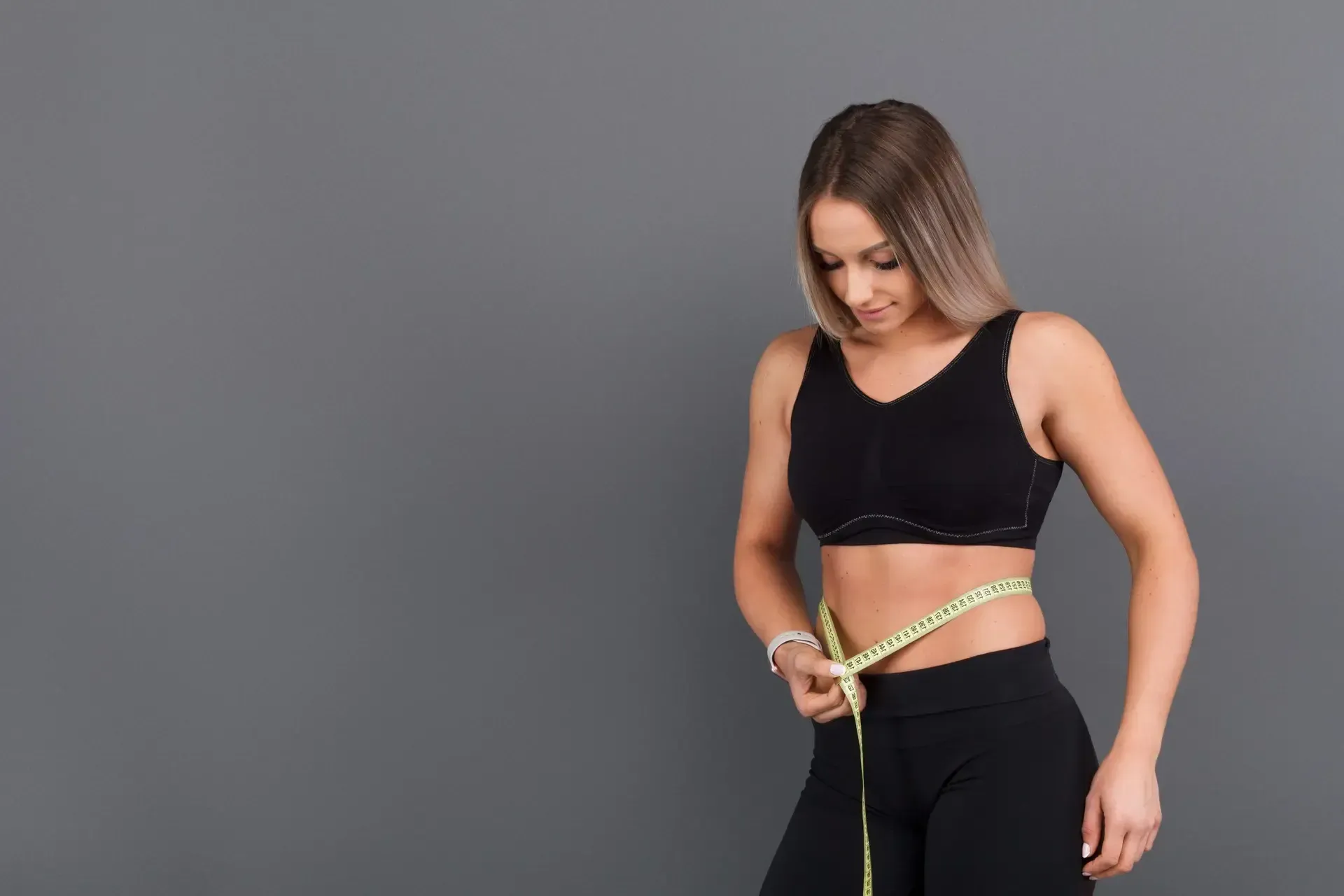
Waist circumference is the simplest indicator. It is measured with a tape measure midway between the lower edge of the ribs and the top of the hip bone, relaxed and without pulling in your stomach. In metabolic syndrome, a waist circumference of more than 88 cm in women and more than 102 cm in men counts as abdominal obesity.
The ratio of waist circumference to height, WHtR (waist-to-height ratio) for short, is often more meaningful. A value below 0.50 indicates a favourable fat distribution; from 0.50, more fat sits on the belly than is good for your health; from 0.60, the value is considered clearly elevated. With the WHtR calculator you have your value in a few seconds; together with your BMI it gives a more complete picture.
The amount of visceral fat can only be determined precisely with imaging techniques such as magnetic resonance imaging (MRI) or computed tomography (CT). A special X-ray measurement of body composition (DXA) can also estimate it. These examinations are not usually carried out solely because of belly fat; for everyday assessment, waist circumference and WHtR are usually sufficient.
Body fat scales send a weak current through the body and use it to estimate the proportion of fat. This is helpful for tracking progress, but does not reliably distinguish between visceral fat and subcutaneous fat. The Weight Doctors® 3D Bodyscan records body fat percentage, WHtR and waist circumference, among other things, in around 30 seconds – always at the same points. This shows whether your belly is getting smaller, even if the scales barely move.
The good news: visceral belly fat responds to changes in everyday life. Even moderate weight loss and regular exercise can reduce waist circumference. However, there is no product that melts away only belly fat in a targeted way – neither a food nor a tea, capsule or powder.

The basis is taking in slightly less energy than the body uses. Most people cannot keep up very strict diets for long, and the body also loses muscle in the process. A deficit that fits permanently into everyday life is better: smaller portions, vegetables and pulses as the basis, wholegrain instead of white flour, enough protein, and water or unsweetened tea instead of sugary drinks.
Exercise has a particularly clear effect on visceral fat: studies show that regular endurance training can reduce visceral fat even when weight changes only slightly. Strength training also preserves muscle, which is otherwise easily lost when losing weight. Abdominal exercises such as crunches strengthen the abdominal muscles, but do not make the fat above or behind them disappear in a targeted way – fat is lost throughout the whole body, not where you train.
Personal consultation
Curious to know more?
Simply leave your contact details here. Our team will get back to you as soon as possible.
Thank you very much!
Your enquiry has arrived. We will call back within 1 hour, or on the next working day outside our business hours.
Before the menopause, women store fat mainly under the skin on the hips, buttocks and thighs. When oestrogen levels fall, fat distribution shifts: more fat is deposited on the belly and between the organs, even if weight stays the same. At the same time, muscle mass decreases with age.
Women over 50 who want to get rid of belly fat therefore rely on the same basics – with two priorities: strength training to preserve muscle, and enough protein. What exactly changes during the menopause and what options are available is explained in the guide Losing weight during the menopause.
How quickly waist circumference decreases varies from person to person. Age, hormones, genetics, sleep and pre-existing conditions all play a part. It helps not only to look at the scales but also to measure your waist regularly: it often shows changes in visceral fat more clearly than your weight.
Liposuction is not a way to reduce visceral fat. It removes subcutaneous fat; the fat in the abdominal cavity lies behind the abdominal muscles and cannot be reached by it. In one study, blood sugar, blood lipids and blood pressure did not change measurably after large-area liposuction of the abdomen.
If your WHtR is 0.50 or above or your waist circumference is increased, a medical check-up makes sense – ideally before symptoms appear. This includes blood sugar, blood lipids and blood pressure. If the values are abnormal, weight loss can help prevent secondary conditions.
If diet and exercise alone are not enough, there are medically supervised options. Personal nutrition coaching helps you stick to the changes in everyday life. In cases of significant excess weight – usually from a BMI of 30, or from 27 with weight-related comorbidities – drug treatment such as Weight Doctors® GLP-1 pharmacotherapy may be an option; whether it makes sense is decided by a specialist after a medical assessment. With a higher BMI, a gastric balloon or a stomach reduction can be options.

Whether your waist circumference is an issue for your health and which approach suits you, we clarify together in a consultation – 100% no obligation. The 3D Bodyscan makes changes to your waist and body fat visible over time, and Weight Doctors® 360° nutrition coaching supports you in making changes in everyday life. Book a consultation
Your question isn’t listed? Your specialist will take time for it during the consultation.
A firm belly that bulges forward with comparatively slim arms and legs is one sign. Waist circumference and WHtR are more reliable: a WHtR of 0.50 or more indicates that more fat sits on the belly than is good for your health. It can only be determined precisely with imaging such as MRI or CT.
This varies from person to person. Visceral fat can respond even to moderate weight loss and regular exercise. This usually shows in waist circumference over weeks to months – so measure regularly, always at the same point.
No single food reduces belly fat in a targeted way. A diet with plenty of vegetables, pulses, wholegrains and protein, little sugar in drinks and little alcohol is helpful – in amounts that result in a slight calorie deficit.
Abdominal exercises strengthen the muscles but do not reduce belly fat in a targeted way. The body loses fat overall, not in the area being trained. Endurance and strength training combined with an adapted diet are considerably more effective.
With the menopause, oestrogen levels fall. As a result, the body tends to store fat on the belly and between the organs rather than on the hips and thighs. In addition, muscle mass decreases with age and the body uses slightly less energy at rest.
Body fat scales estimate the proportion of fat using a weak current. They are useful for tracking progress, but do not reliably distinguish between visceral fat and subcutaneous fat. For assessment at home, waist circumference and WHtR are more meaningful.
No. Liposuction only reaches the fat under the skin. Visceral fat lies behind the abdominal muscles between the organs and cannot be suctioned out. It can be reduced through diet, exercise and weight loss.
* For patients with German statutory health insurance: if the medical indication is established in line with the DGAV guidelines, reimbursement may be possible.
New treatments, dates such as our webinars and knowledge about losing weight – straight to your inbox. You can unsubscribe at any time with one click.
The first step is a conversation: choose your treatment, location and appointment online here – consultation on site, by video or by phone.
Which treatment are you interested in?
No matching treatment found. Select “Still undecided?” in one of the areas and we will call you.
* For patients with German statutory health insurance: if the medical indication is established in line with the DGAV guidelines, reimbursement may be possible.
At which location would you like your consultation?
How would you like your consultation?
Choose your appointment
Prefer to call? 0800 84 84 777Mon–Fri 8 am–8 pm · Sat 9 am–3 pm
Weight Doctors® at 23 locations in 6 countries23 locations
Which location is closest to you?0800 84 84 777
Which location is closest to you?
Germany
Austria
Netherlands
United Kingdom
South Africa
Namibia
Mira
Digital assistant from Weight Doctors®
With AI · Guidance, not medical advice. Privacy
Medically supervised pharmacotherapy with regular progress monitoring – with no procedure at all.
No procedure
Find out more Weight Doctors® GLP-1 pharmacotherapyBook a consultation
Losing weight without medication: lowering the hunger hormone endoscopically – no surgery, no incisions. On its own or combined with an endo sleeve.
Long-lastingNew
A temporary companion for 6 or 12 months – also swallowable, with no endoscopy at all.
No surgery
Find out more Weight Doctors® GASTRIC BALLOONBook a consultation
Permanent stomach reduction without conventional surgery – endoscopic, outpatient, without scars.
No surgeryHealth insurance cover also possible*
Gastric bypass or gastric sleeve surgery for higher BMIs, incl. private medical preliminary examination and aftercare.
With surgeryHealth insurance cover also possible*
Post-bariatric body contouring after successful weight loss.
After weight lossHealth insurance cover also possible*
Corrective procedure when earlier weight-loss surgery has not brought the desired success.
With surgeryHealth insurance cover also possible*
Nutrition coaching and support in everyday life – in person, by video and in the app.
No procedure
Medical oversight, app, scales, 3D Bodyscan and aftercare – the foundation of every Weight Doctors® therapy.
In lipoedema, fatty tissue increases abnormally on the legs or arms – with consultation and lipoedema surgery.
LipoedemaHealth insurance cover also possible*
Find out more Weight Doctors® lipoedema surgeryBook a consultation
* For patients with German statutory health insurance: if the medical indication is established in line with the DGAV guidelines, reimbursement may be possible.