3,087 reviewsof the Weight Doctors® Group · 97% recommendation rateBlog · 11 August 2026 · 10 min read

Lowering the hunger hormone ghrelin: how hydroGMA can help

You stick to your nutrition plan, and yet your thoughts keep circling around food? That is not down to a lack of discipline. What ghrelin has to do with it and where hydroGMA comes in.

GermanyMedically reviewed byPriv.-Doz. Dr. med. Dörte WichmannSpecialist in visceral surgery & expert in endobariatricsLast updated:

The essentials in brief

Less hunger,
more orientation

Hunger is controlled by a complex interplay of brain, stomach, gut and hormones. One of these hormones is ghrelin – and this is exactly where the endoscopic treatment Weight Doctors® hydroGMA comes in.

  1. Hunger is biologyGhrelin is mainly produced in the upper stomach and can rise during weight loss. Sleep and a diet rich in protein and fibre help, but do not switch it off permanently.
  2. hydroGMA targets the fundusThe mucosa that produces ghrelin is treated endoscopically – without an abdominal incision, without removing stomach tissue and without a foreign body remaining in the body.
  3. Early data, no guaranteeFirst small studies show a possible principle of action. Large randomised long-term studies are still lacking, and hydroGMA remains a medical procedure with individual risks.

Why hunger is not a question of willpower

Many people with excess weight know this cycle: at the start of a change in diet, things go well. But the more weight is lost, the louder hunger seems to become. Portions suddenly feel too small, thoughts circle around food more often, and a small appetite quickly turns into cravings.

Behind this is a normal protective reaction of the body. For the body, weight loss initially means that energy reserves are dwindling. It responds with signals intended to increase appetite and maintain body weight – ghrelin plays an important role here. This explains why long-term weight loss is often so much harder than the firm decision to eat less.

What is ghrelin?

Ghrelin is a hormone produced by the body. It is formed mainly in the mucosa of the upper stomach, in the so-called fundus (also called the gastric bubble). When the ghrelin level rises, the brain receives, put simply, the signal: it is time to eat. After a meal, the level normally falls again.

However, ghrelin is not a simple on-off switch. Sleep, meals, changes in weight and other hormones influence how hunger and fullness are perceived. Feelings, habits and personal surroundings also play a part. Excess weight can therefore be reduced neither to a single hormone nor to a lack of self-control.

Why ghrelin can make losing weight harder

During a reduced-calorie diet, the ghrelin level can rise. This hormonal adjustment can contribute to hunger becoming stronger over the course of a diet. Studies show that such adjustments partly persist even after successful weight loss. The body is therefore trying to defend its previous weight – just when perseverance would be particularly important.

That does not mean that losing weight is impossible. But it explains why medical support, realistic goals and a long-term strategy often achieve more than the next short-term diet.

Can ghrelin be lowered naturally?

A single meal or a particular food cannot switch ghrelin off permanently. However, regular meals, enough sleep, a diet rich in protein and fibre, and exercise can help to manage hunger better and support weight loss. What matters is not the perfect daily plan, but a way of living that suits your everyday life in the long term.

With severe excess weight or obesity, however, a change in lifestyle alone is not always enough. Depending on starting weight, related conditions, previous treatment and personal goal, medication, a gastric balloon, endoscopic procedures or weight-loss surgery may then come into question. The choice should always be made together with an experienced medical team.

A new approach directly in the stomach

What is hydroGMA?

Weight Doctors® hydroGMA stands for gastric mucosal ablation, the targeted treatment of the stomach lining. The top layer of the mucosa in the fundus is treated – that is, exactly the area where a large proportion of the cells that produce ghrelin are located. The MOVIVA® system from Erbe Elektromedizin is used.

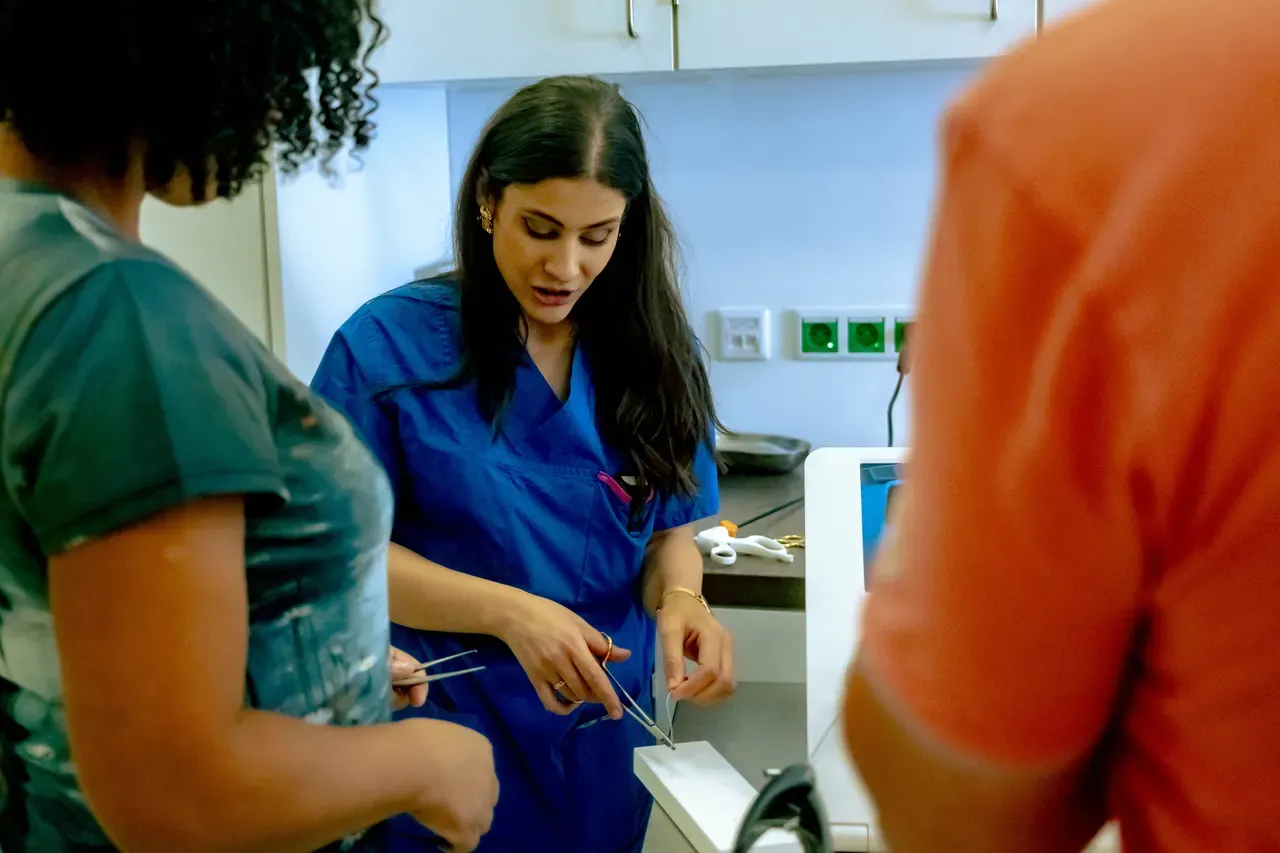
The procedure takes place as part of a gastroscopy: a flexible endoscope is guided through the mouth and oesophagus into the stomach. No external incisions are needed, no stomach tissue is removed, and no foreign body remains in the body. More medically accurate than “entirely without a procedure” is therefore: endoscopic, minimally invasive and without an abdominal incision.

Step by step

How gastric mucosal ablation works

  1. The treatment area is determinedThe medical team examines the stomach and marks the mucosa in the fundus that is to be treated.
  2. A fluid cushion protects the stomach wallSaline solution is injected under the mucosa. The top tissue layer lifts, and the deeper layers are protected from the heat treatment.
  3. The mucosa is treated superficiallyThe lifted tissue is ablated in a controlled way with argon plasma. The aim is to reduce the activity of the cells that produce ghrelin.
  4. The treated area healsThe surface then regenerates. Stomach protection, a gradual reintroduction of food and medical check-ups support healing.

The ablation itself takes about 15–25 minutes, the whole examination around 40 minutes. hydroGMA alone is usually carried out under sedation or short general anaesthesia and, as a rule, as an outpatient; combined with Weight Doctors SLEEVE®, under general anaesthesia, usually with one night for observation. The final decision is made individually by the treatment team.

In conversation

Our specialists explain hydroGMA

How the procedure works, what the combination offers and what the first experiences show is explained step by step in conversation by Priv.-Doz. Dr. med. Dörte Wichmann and Dr. med. Oliver Scheffel – in nine short films on this page.

“hydroGMA is endoscopic precision work: we treat only the top layer of the mucosa in a targeted way – exactly where the hunger cells are located. No incision, no stitches. For many patients, this is the gentle entry point they have long been waiting for.”

Priv.-Doz. Dr. med. Dörte Wichmann, specialist in visceral surgery & specialist in endobariatrics

What have the studies shown so far?

The results so far are promising, but have to be put into the right context. hydroGMA, that is gastric fundus mucosal ablation, is a new procedure. The data so far come mainly from small pilot studies without large randomised comparison groups.

  • hydroGMA aloneIn a first clinical study, ten women with obesity were examined six months after fundus mucosal ablation alone. On average, they had lost 7.7% of their starting weight. At the same time, fasting ghrelin fell by more than 40%, and hunger and cravings for food also decreased in the questionnaires. For hydroGMA alone, a loss of up to 15% of starting weight after one year is reported. Because of the small number of participants, these results do not yet allow a reliable prediction for individual patients.
  • hydroGMA combined with Weight Doctors SLEEVE®The two procedures act at two points. hydroGMA targets hormone-mediated hunger, while Weight Doctors SLEEVE® reduces the stomach volume through endoscopic sutures. In a pilot study published in 2026, ten participants first received a fundus mucosal ablation and, six months later, an endoscopic stomach reduction. After 18 months in total, the average weight loss was 22.5% of starting weight – a figure for the combination of both procedures.

According to the same authors, endoscopic stomach reduction alone already achieves 13.6–16.2%; what share is attributable to the mucosal ablation cannot be quantified without a control group. At the same time, fasting ghrelin moved back towards its starting value over time – how lasting the hormonal effect is therefore needs further study. Because the study examined treatment staggered in time, its results cannot automatically be transferred to every combined procedure carried out at the same time.

FeaturehydroGMA alonehydroGMA + endoscopic stomach reduction
Approachless hormone-mediated hungerless hunger plus a smaller stomach volume
Stomach suturenoyes, with Weight Doctors SLEEVE®
Early study data7.7% average weight loss after 6 months; up to 15% is reported after one year22.5% average weight loss after 18 months in a staggered pilot study – a figure for the combination, not for the ablation alone
Evidence basestill limitedstill limited; not directly transferable to every combination

Weight loss in each case relative to starting weight. Results are not guaranteed and vary from person to person.

An honest assessment

hydroGMA is a young procedure: in the treatment of obesity it is a new technique and not yet an established standard procedure, and the evidence is currently limited. The first clinical results are promising; large long-term studies are still under way. All the more important are a careful check of suitability and an honest assessment of what is realistically achievable for you.

Who might hydroGMA be suitable for?

hydroGMA can be of interest to people who, despite structured nutrition and exercise therapy, suffer greatly from hunger or frequent cravings for food and are looking for an endoscopic alternative to medication or surgery. Whether the treatment really suits you, however, does not depend on weight alone. Before a decision, Weight Doctors® checks, among other things:

  • Starting weight, weight history and personal weight-loss goal
  • Related conditions and previous attempts at treatment
  • Illnesses or previous operations on the stomach and oesophagus
  • Medication, blood clotting and anaesthetic risk
  • Eating behaviour, expectations and willingness to commit to long-term aftercare

The procedure may not be suitable, or only after particularly careful assessment, for example in cases of active stomach ulcers, severe clotting disorders, certain previous operations on the stomach, pregnancy or severe general illnesses. The final assessment is always medical and individual.

What risks and side effects are possible?

Even an endoscopic procedure without an abdominal incision is a medical procedure. In early studies, the main findings were temporary abdominal pain or a feeling of pressure, nausea, a feeling of fullness, bloating and throat discomfort after the gastroscopy. These complaints often subside within a few days.

Rare but to be taken seriously are complications such as bleeding, infections, mucosal ulcers, injury that is too deep due to the heat, or injury to the stomach wall. This is why the treatment belongs in experienced hands, and aftercare includes stomach protection, an adapted reintroduction of food and check-up appointments. In the informed-consent conversation, benefits, alternatives and your personal risk are discussed in detail.

What happens after the treatment?

After medical clearance, a gradual reintroduction of food follows. The exact instructions depend on the extent of the procedure and on whether hydroGMA was carried out alone or together with Weight Doctors SLEEVE®. Medication to protect the stomach lining and fixed check-up appointments are important parts of aftercare.

What matters is this: the procedure does not do all the work. It can reduce hunger and thus create a window of time in which new habits are easier to form. A long-term result comes from the interplay of treatment, diet, exercise, behaviour and regular support – which is why, at Weight Doctors®, hydroGMA is embedded in comprehensive aftercare.

hydroGMA, GLP-⁠1 or stomach reduction?

There is no single treatment that suits everyone. GLP-⁠1 therapy influences hunger and fullness without an endoscopic procedure, but has to be used regularly and can have side effects. A gastric balloon temporarily takes up space in the stomach and is later removed. Weight Doctors SLEEVE® reduces the stomach endoscopically with sutures.

Operations such as gastric sleeve or gastric bypass are very effective, but permanently change the anatomy and require lifelong medical aftercare. hydroGMA adds a new, hormone-based path to this range. Which option suits your weight, your pre-existing conditions and your ideas should be decided in an open-ended consultation – not on the basis of a single promise or a single figure.

Where hydroGMA takes place and what it costs

Weight Doctors® carries out hydroGMA at the Weight Doctors® Nationalklinik in Wertheim, around 40 minutes south of Frankfurt Airport. The no-obligation initial consultation is possible by telephone, by video or at one of the 23 locations in 6 countries.

hydroGMA is a self-pay service; the German statutory health insurers do not cover the costs. We discuss the costs openly in the consultation, and financing through medipay is possible (more under Payment in instalments).

Conclusion: fighting your own hunger less

Anyone who is repeatedly held back by strong hunger when losing weight does not automatically fail through a lack of discipline. The body defends its weight with biological mechanisms, and ghrelin is part of that. Weight Doctors® hydroGMA targets the stomach lining that produces ghrelin – endoscopically, without an abdominal incision and without removing stomach tissue.

The first study results are encouraging, but the data are still limited. A responsible decision therefore includes a personal suitability check, honest information about alternatives and risks, and consistent aftercare.

This article is for general information and does not replace a personal medical examination, diagnosis or treatment recommendation. Whether hydroGMA or another obesity therapy is suitable can only be decided after an individual medical assessment.

Films

  • Part 1: What is hydroGMA? – Priv.-Doz. Dr. med. Dörte Wichmann and Dr. med. Oliver Scheffel
  • Part 2: How hydroGMA works – Dr. med. Oliver Scheffel
  • Part 3: What the studies show – Priv.-Doz. Dr. med. Dörte Wichmann
  • Part 4: Gentler than a gastric balloon – Dr. med. Oliver Scheffel
  • Part 5: Back to everyday life the very next day – Priv.-Doz. Dr. med. Dörte Wichmann
  • Part 6: How much weight is possible? – Dr. med. Oliver Scheffel
  • Part 7: The process – Priv.-Doz. Dr. med. Dörte Wichmann
  • Part 8: Combined with the endo sleeve – Dr. med. Oliver Scheffel
  • Part 9: Two techniques, one procedure – Priv.-Doz. Dr. med. Dörte Wichmann and Dr. med. Oliver Scheffel
Frequently asked questions

Questions and answers

Your question isn’t listed? Your specialist will take time for it during the consultation.

Can ghrelin be switched off permanently?

No. Ghrelin performs important functions in the body. Lifestyle and medical treatments can influence hunger, but do not switch the regulation off completely and permanently.

Is hydroGMA surgery?

No, hydroGMA is carried out endoscopically via a gastroscopy – without an abdominal incision, without removing stomach tissue and without a foreign body. Nevertheless, it is a medical procedure with anaesthetic and procedural risks.

Can hydroGMA be combined with Weight Doctors SLEEVE®?

In principle, yes. Less hunger and a smaller stomach volume are then intended to work together. Whether the combination with Weight Doctors SLEEVE® makes sense for you, we decide individually after the suitability check.

How much weight can you lose with hydroGMA?

A loss of up to 15% of starting weight after one year is reported. In the first small study on mucosal ablation alone, the average weight loss after six months was 7.7%. Results vary from person to person and can differ considerably; there is no guarantee.

How long does the effect last?

This has not yet been conclusively established; further studies are under way. Because the cells that produce ghrelin can grow back over time, repeat treatment is possible in principle. There are currently no generally valid recommendations on the best timing.

Does hydroGMA replace a change in diet?

No. The procedure can influence the feeling of hunger and support weight loss. For a long-term result, diet, exercise, behaviour change and aftercare remain decisive.

Blog & News

More articles

All articles
Read more

All treatments at a glance

Wide range of services
no procedure
Surgery
  1. No procedureWeight Doctors® GLP-⁠1 pharmacotherapyMedication-based, no procedure
  2. No procedureWeight Doctors® 360°Nutrition coaching
  3. Long-lastingNewWeight Doctors® hydroGMAEndoscopic, no incisions
  4. No surgeryWeight Doctors® GASTRIC BALLOONTemporary, also swallowable
  5. No surgeryHealth insurance cover also possible*Weight Doctors SLEEVE®Endoscopic, permanent
  6. With surgeryHealth insurance cover also possible*Weight Doctors BARIATRICS®Surgical, minimally invasive
  7. With surgeryHealth insurance cover also possible*Weight Doctors® REVISIONCorrective procedure after weight-loss surgery
  8. LipoedemaHealth insurance cover also possible*Weight Doctors® lipoedema surgeryLiposuction for lipoedema
  9. After weight lossHealth insurance cover also possible*Weight Doctors® RESHAPEAfter weight loss

* For patients with German statutory health insurance: if the medical indication is established in line with the DGAV guidelines, reimbursement may be possible.

Newsletter

News from Weight Doctors®

New treatments, dates such as our webinars and knowledge about losing weight – straight to your inbox. You can unsubscribe at any time with one click.

Protected by privacy-friendly spam protection, without tracking and without cookies.

* Required fields

Consultation

On to your Weight Doctors® Experience.

The first step is a conversation: choose your treatment, location and appointment online here – consultation on site, by video or by phone.

  • 100% no obligation
  • One-to-one with your specialist
  • Appointments online, around the clock
  • 23 locations in 6 countries

Prefer to call? 0800 84 84 777Mon–Fri 8 am–8 pm · Sat 9 am–3 pm

Weight Doctors® at 23 locations in 6 countries23 locations

Which location is closest to you?

0800 84 84 777Book a consultationBook a consultation