
 InternationalYour location

 Weight Doctors® GLP-1 pharmacotherapyMedication-based, no procedure3–12 months · from €599
Medically supervised pharmacotherapy with regular progress monitoring – with no procedure at all.
No procedure
Mon–Fri 8 am–8 pm · Sat 9 am–3 pm
GLP-1 medicines, endo sleeve and gastric balloon compared: study results, experiences from practice, combinations, costs and safety – and which path suits whom.
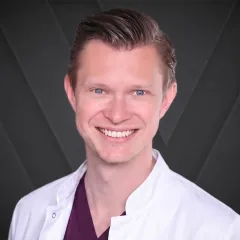

 Medically reviewed byDr. med. Robert JennerSpecialist in visceral surgery / specialised visceral surgeryLast updated:
The treatment of obesity has changed fundamentally since 2022. With the so-called “weight-loss injections” – GLP-1 analogues – there are for the first time medications that make weight losses possible of a kind previously known almost only from bariatric surgery. At the same time, endoscopic procedures such as endoscopic sleeve gastroplasty (endo sleeve) and gastric balloons are establishing themselves as minimally invasive alternatives.
This raises questions: are endoscopic procedures still needed if medications are so effective? Or does combining different approaches offer better prospects? This article puts the current state of research into context and shows how obesity therapy can be improved by a sensible combination of methods.
Which route may be an option for you also depends on your BMI – you can determine it with our BMI calculator.
The newer GLP-1 receptor agonists have shown great success in weight management in randomised clinical trials. The studies mainly looked at a GLP-1 preparation injected once a week (STEP trials) and a dual GLP-1/GIP agent that additionally mimics a second gut hormone (SURMOUNT trials):
| Study | Participants | Average weight loss |
|---|---|---|
| STEP-1 (GLP-1 preparation, 68 weeks) | without diabetes, BMI ~38 | 15% (≈ 15–16 kg) compared with 2–3% on placebo |
| STEP-2 (GLP-1 preparation) | with type 2 diabetes | 9.6% (≈ 9–10 kg) compared with 3.4% on placebo |
| SURMOUNT-1 (dual agent, 72 weeks), highest dose | without diabetes, BMI ~38 | 22.5% (≈ 23–24 kg) |
| SURMOUNT-1, medium dose | without diabetes, BMI ~38 | ~21% (≈ 22 kg) |
| SURMOUNT-1, lowest dose | without diabetes, BMI ~38 | ~16% (≈ 16 kg) |
| SURMOUNT-2 (dual agent) | with diabetes | 15.7% (≈ 15–16 kg) |
Study values are averages. Results vary from person to person.
The study results are also largely reflected in everyday treatment – although factors in practice influence the effect:
Important on adherence: more than half (54%) stopped therapy within 12 months – because of side effects, cost or limited availability.
Two accounts show how differently the journey with GLP-1 can go: Carina, 43, from Vienna, started a GLP-1 preparation in 2023. She lost a significant amount of weight, reported much less appetite, above all for sweet things and alcohol, and felt great relief physically and emotionally. Then weight loss stalled despite continued treatment, supply shortages made therapy difficult – and after abruptly stopping, part of the weight came back within a few months.
Serdar, 37, with type 2 diabetes, also started a GLP-1 preparation in 2023. At first he lost weight slowly; after a few weeks the effect faded. He increased the dose on his own initiative and eventually stopped treatment out of concern about further increases.
In the endo sleeve, the stomach is reduced to a tube shape with endoscopic sutures – similar to a gastric sleeve operation, but entirely without incisions. At Weight Doctors® the treatment is called Weight Doctors SLEEVE®.
Gastric balloons are a solution for a limited time that can help markedly with weight loss. They are placed in the stomach endoscopically or – with newer models – by swallowing, stay for 4–12 months depending on the system and, as a placeholder, create a lasting feeling of fullness.
The overview shows a clear gradation of effectiveness – measured by average weight loss:
Combining different approaches shows promising results:
Study values are averages. Results vary from person to person.
Which therapy suits depends on several factors:
GLP-1 preparations cost money every month and must be used permanently for a lasting effect. Endoscopic procedures, by contrast, are a one-off cost. A cost model calculation over 5 years concluded that the endo sleeve is around 63% cheaper over this period than continuous GLP-1 therapy; the preparations would have to become about 70% cheaper to keep up.
If you stop a therapy, the costs incurred up to that point are lower with medication. Combinations cost more at the start but can bring better results. You can see what the treatments at Weight Doctors® cost under Costs & prices.
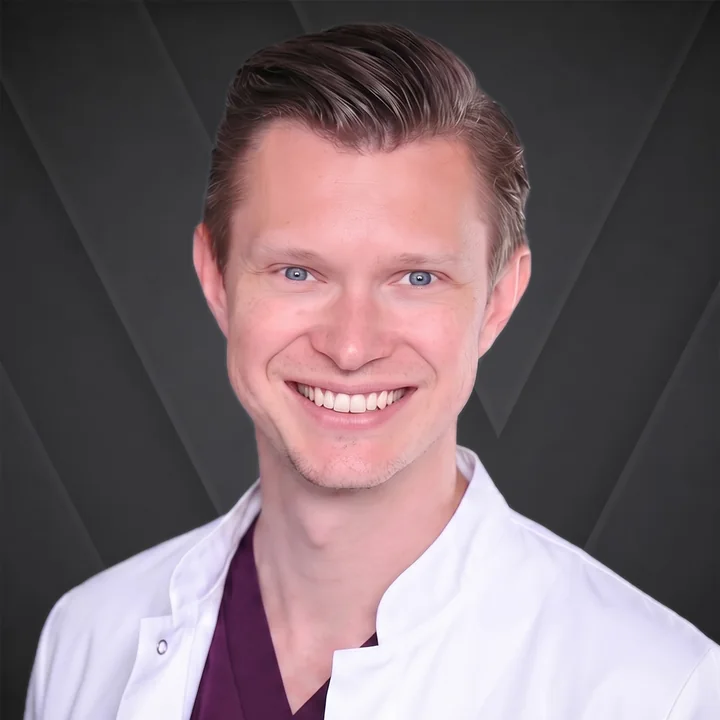
“The future of obesity therapy lies in personalised medicine. We see every day how differently patients respond to different therapies. A 45-year-old with diabetes may be best treated with a modern GLP-1 analogue, while a 35-year-old woman without diabetes benefits from a combination of endo sleeve and low-dose medication. Our task is to recognise these individual needs and find the right combination for each patient.”
Obesity therapy is changing fundamentally: previously a stepwise therapy applied – lifestyle first, then medication, surgery last. Today, in suitable patients, approaches are combined from the start. And instead of standard solutions, personal selection comes to the fore: with biomarkers, genetic factors in the response to medication and AI-supported treatment pathways, which are in development.
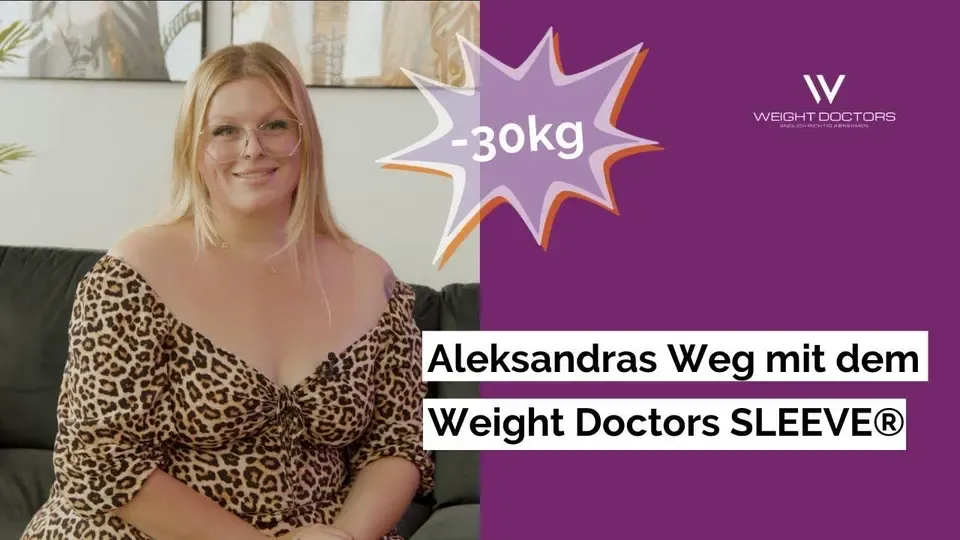
A sympathetic preliminary conversation and extensive expertise are the basis for a stomach reduction. In the film, a patient tells of her experiences and why, after careful consideration and research, she chose Weight Doctors® – there is also information on the opportunities of such a procedure. You can find more films in our media library.
Are you interested in the new possibilities in obesity therapy? At Weight Doctors® we advise you on all routes – and treat ourselves: with Weight Doctors® GLP-1, the Weight Doctors® GASTRIC BALLOON, the Weight Doctors SLEEVE® and Weight Doctors BARIATRICS®.
Obesity therapy is in upheaval. GLP-1 analogues have changed the field greatly and make weight losses possible that were hardly conceivable before. Endoscopic procedures such as the endo sleeve and gastric balloons complement them with advantages of their own.
The future lies not in competition between these methods, but in their sensible combination: personal therapy concepts that combine the strengths of different approaches – one after the other or at the same time – can help patients achieve better results. Together we find the treatment that suits you.
Sources: STEP-1/2 trials, SURMOUNT-1/2/5 trials, SCOPE registry, Truveta analysis, studies on the endo sleeve and on combination therapies, cost studies and expert voices (including pmc.ncbi.nlm.nih.gov, pubmed.ncbi.nlm.nih.gov, diabetes.org, worldobesity.org, news.harvard.edu, houstonmethodist.org), as of May 2025.
Your question isn’t listed? Your specialist will take time for it during the consultation.
GLP-1 analogues are medications that mimic the body’s own hormone GLP-1. They regulate blood sugar, slow stomach emptying and reduce the feeling of hunger. In this way they can help with weight loss.
In studies, participants lost on average 8–22% of their body weight depending on the agent – with a starting weight of 100 kg, that is about 8–22 kg. Results vary from person to person.
Yes, with a double benefit: they can lower weight and blood sugar. In studies, people with diabetes usually lose somewhat less weight in percentage terms than people without diabetes. Results vary from person to person.
Many notice first weight losses in the first 4–8 weeks. The greatest effect is usually reached after 6–12 months.
Serious complications are rare: in studies they occurred in fewer than 1% of cases, in one large series in 0.2%. The risk is markedly lower than with an operation – but this procedure is not entirely without risk either. More on the Weight Doctors SLEEVE®.
Yes. Studies show that a combination often brings more weight loss than one method alone – for example GLP-1 pre-treatment before the endo sleeve or GLP-1 therapy after the gastric balloon. Results vary from person to person.
Above all with severe obesity with a BMI over 40, when a single therapy does not work sufficiently, with a weight plateau, or when the yo-yo effect has already struck more than once.
Yes. We advise on all routes and treat with GLP-1, gastric balloon, Weight Doctors SLEEVE® and Weight Doctors BARIATRICS®. We coordinate combinations medically – one after the other or at the same time.
After a detailed medical history, we assess your situation and inform you about all suitable routes – GLP-1, gastric balloon, endo sleeve or weight-loss surgery, alone or combined. The consultation is no obligation and takes place by phone, by video or on site.
Why GLP-1 pharmacotherapy helps many people but is not the whole answer for everyone – and which paths there are when the injection alone is not enough.
7 min

GLP-1 pharmacotherapy, gastric balloon, endo sleeve or weight-loss surgery: there is no single answer. But there is one right first step – an honest, personal conversation.
6 min
The balloon is out, the intensive weight-loss phase is over – and the hunger comes back? How GLP-1 therapy can help to maintain the weight you have reached.
5 min
* For patients with German statutory health insurance: if the medical indication is established in line with the DGAV guidelines, reimbursement may be possible.
New treatments, dates such as our webinars and knowledge about losing weight – straight to your inbox. You can unsubscribe at any time with one click.
The first step is a conversation: choose your treatment, location and appointment online here – consultation on site, by video or by phone.
No matching treatment found. Select “Still undecided?” in one of the areas and we will call you.
* For patients with German statutory health insurance: if the medical indication is established in line with the DGAV guidelines, reimbursement may be possible.
Prefer to call? 0800 84 84 777Mon–Fri 8 am–8 pm · Sat 9 am–3 pm
Weight Doctors® at 23 locations in 6 countries23 locations
Which location is closest to you?
Which location is closest to you?
Germany
 Austria
Netherlands
 United Kingdom
 South Africa
 Namibia
Mira
Digital assistant from Weight Doctors®
With AI · Guidance, not medical advice. Privacy
Weight Doctors® GLP-1 pharmacotherapyMedication-based, no procedure3–12 months · from €599Medically supervised pharmacotherapy with regular progress monitoring – with no procedure at all.
No procedure
 Weight Doctors® hydroGMAEndoscopic, no incisionsapprox. 30 min · on request
Losing weight without medication: lowering the hunger hormone endoscopically – no surgery, no incisions. On its own or combined with an endo sleeve.
Long-lastingNew
 Weight Doctors® GASTRIC BALLOONTemporary, also swallowable6 or 12 months · from €3,490
A temporary companion for 6 or 12 months – also swallowable, with no endoscopy at all.
No surgery
 Weight Doctors SLEEVE®Endoscopic, permanent30–60 min · from €5,500
Permanent stomach reduction without conventional surgery – endoscopic, outpatient, without scars.
No surgeryHealth insurance cover also possible*
 Weight Doctors BARIATRICS®Surgical, minimally invasive1–3 nights · from €2,500
Gastric bypass or gastric sleeve surgery for higher BMIs, incl. private medical preliminary examination and aftercare.
With surgeryHealth insurance cover also possible*
 Weight Doctors® RESHAPEAfter weight lossindividual · from €1,950
Post-bariatric body contouring after successful weight loss.
After weight lossHealth insurance cover also possible*
 Weight Doctors® REVISIONCorrective procedure after weight-loss surgeryindividual · from €900
Corrective procedure when earlier weight-loss surgery has not brought the desired success.
With surgeryHealth insurance cover also possible*
 Weight Doctors® 360°Nutrition coachingper session · from €65
Nutrition coaching and support in everyday life – in person, by video and in the app.
No procedure
 Weight Doctors® MEMBERSHIPThe foundation of every therapy
Medical oversight, app, scales, 3D Bodyscan and aftercare – the foundation of every Weight Doctors® therapy.
 Weight Doctors® lipoedema surgeryLosing weight with a fat distribution disorder1.5–3 hours · from €950
In lipoedema, fatty tissue increases abnormally on the legs or arms – with consultation and lipoedema surgery.
LipoedemaHealth insurance cover also possible*
* For patients with German statutory health insurance: if the medical indication is established in line with the DGAV guidelines, reimbursement may be possible.